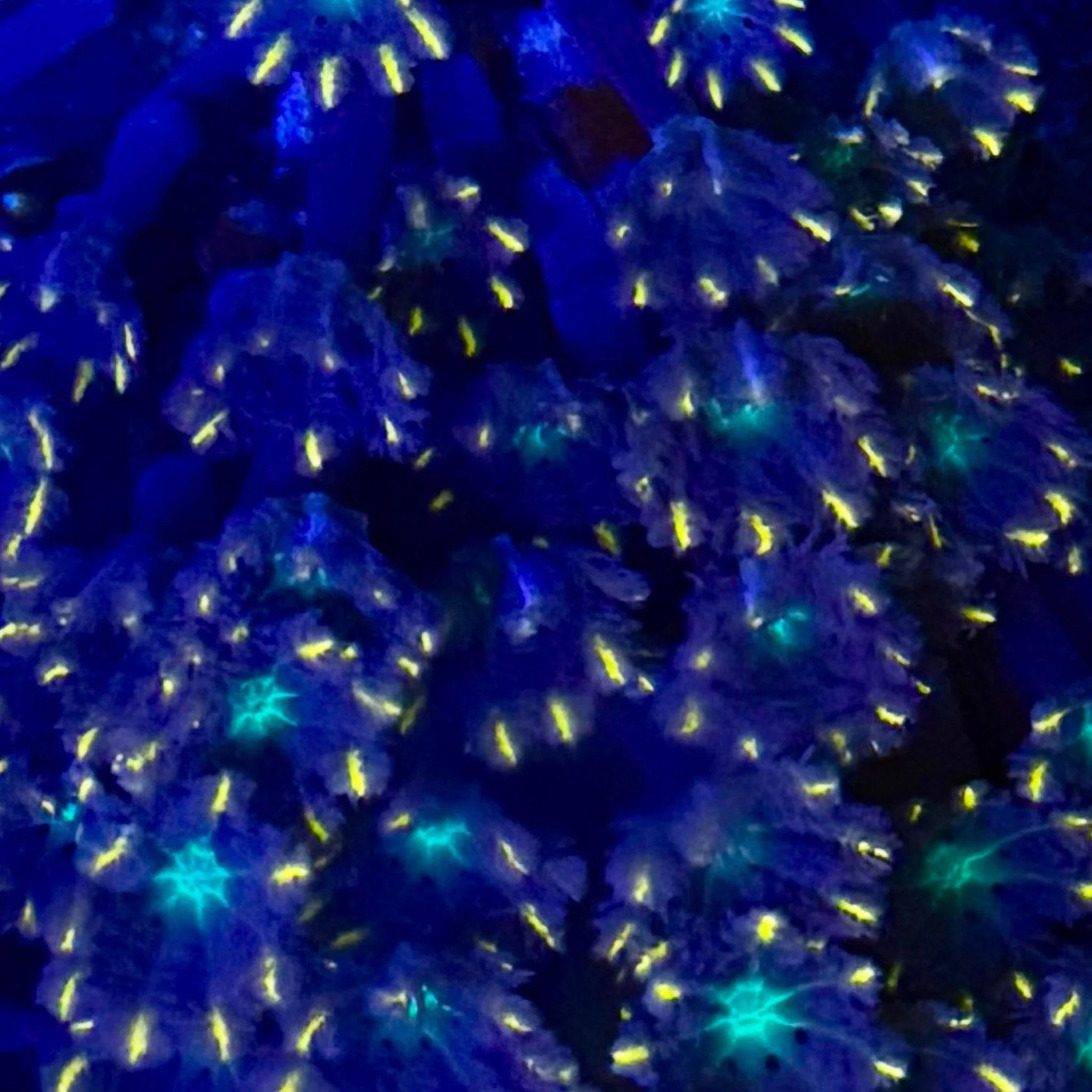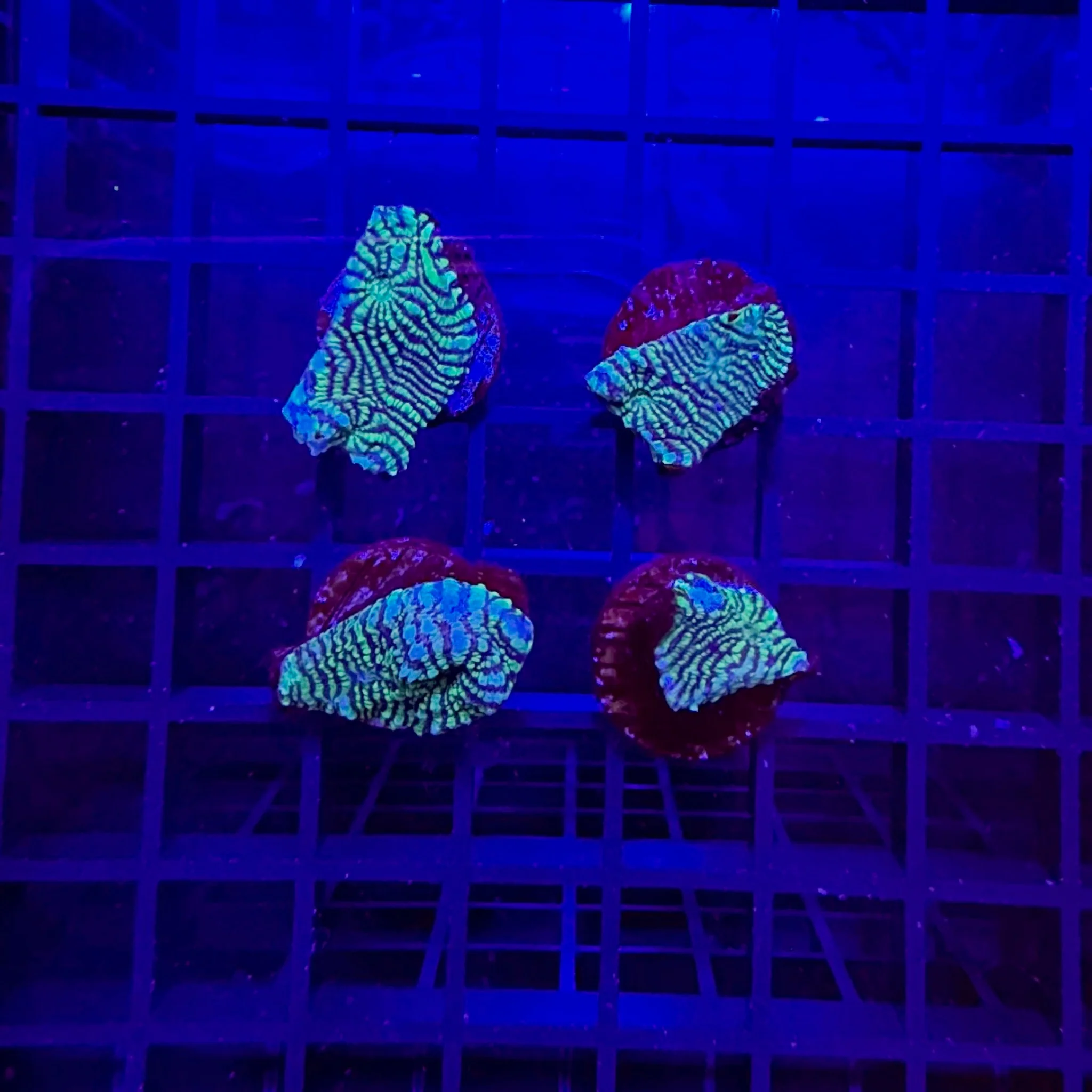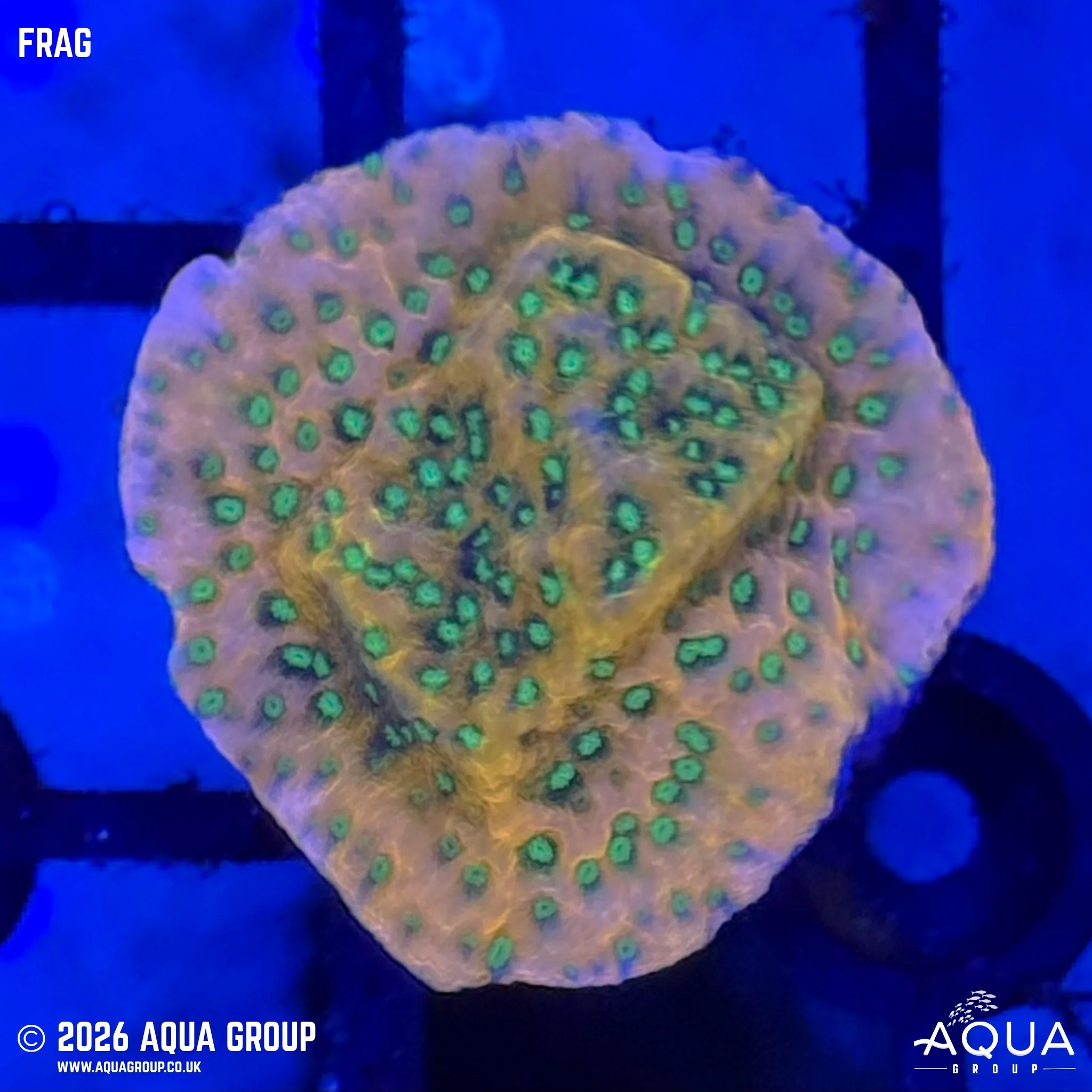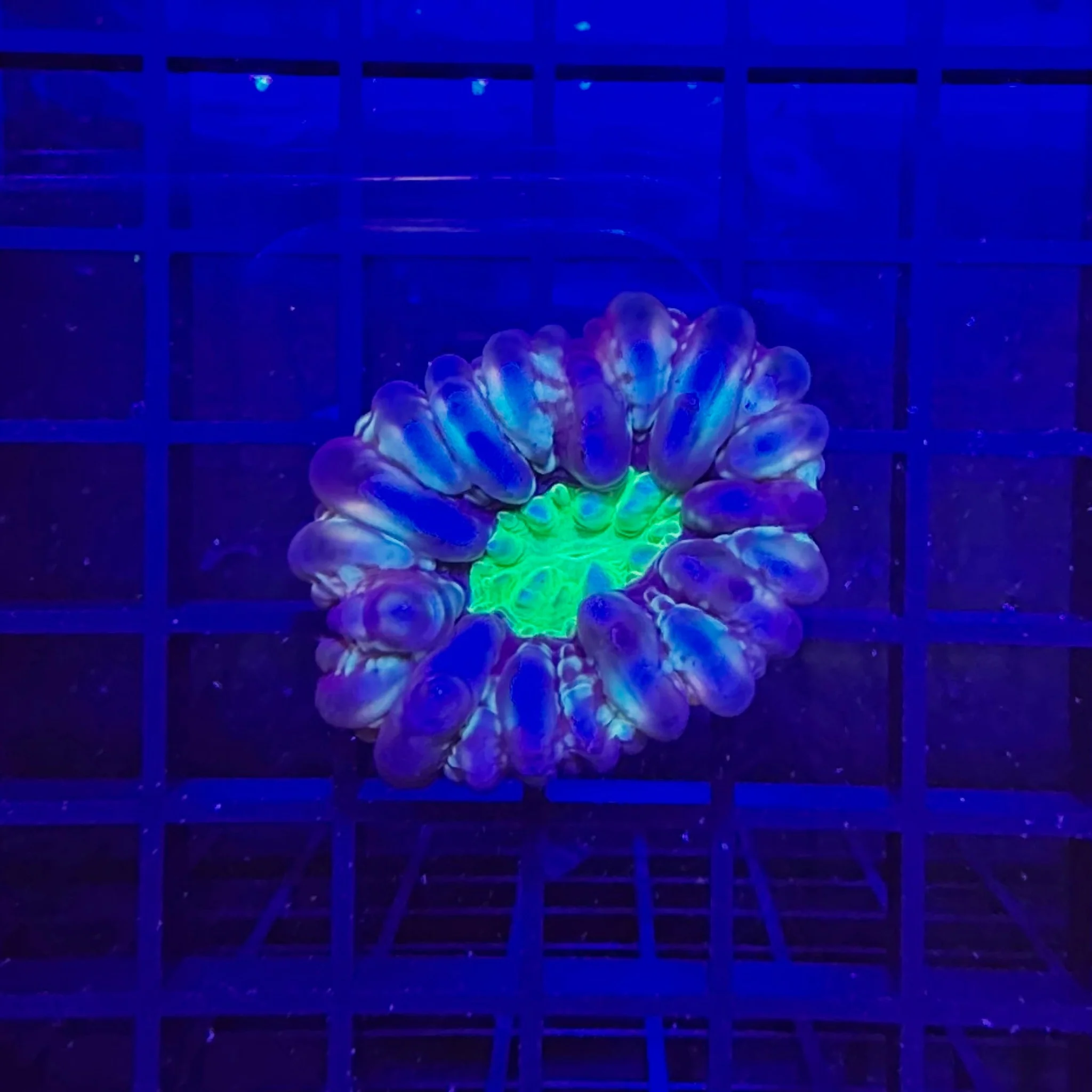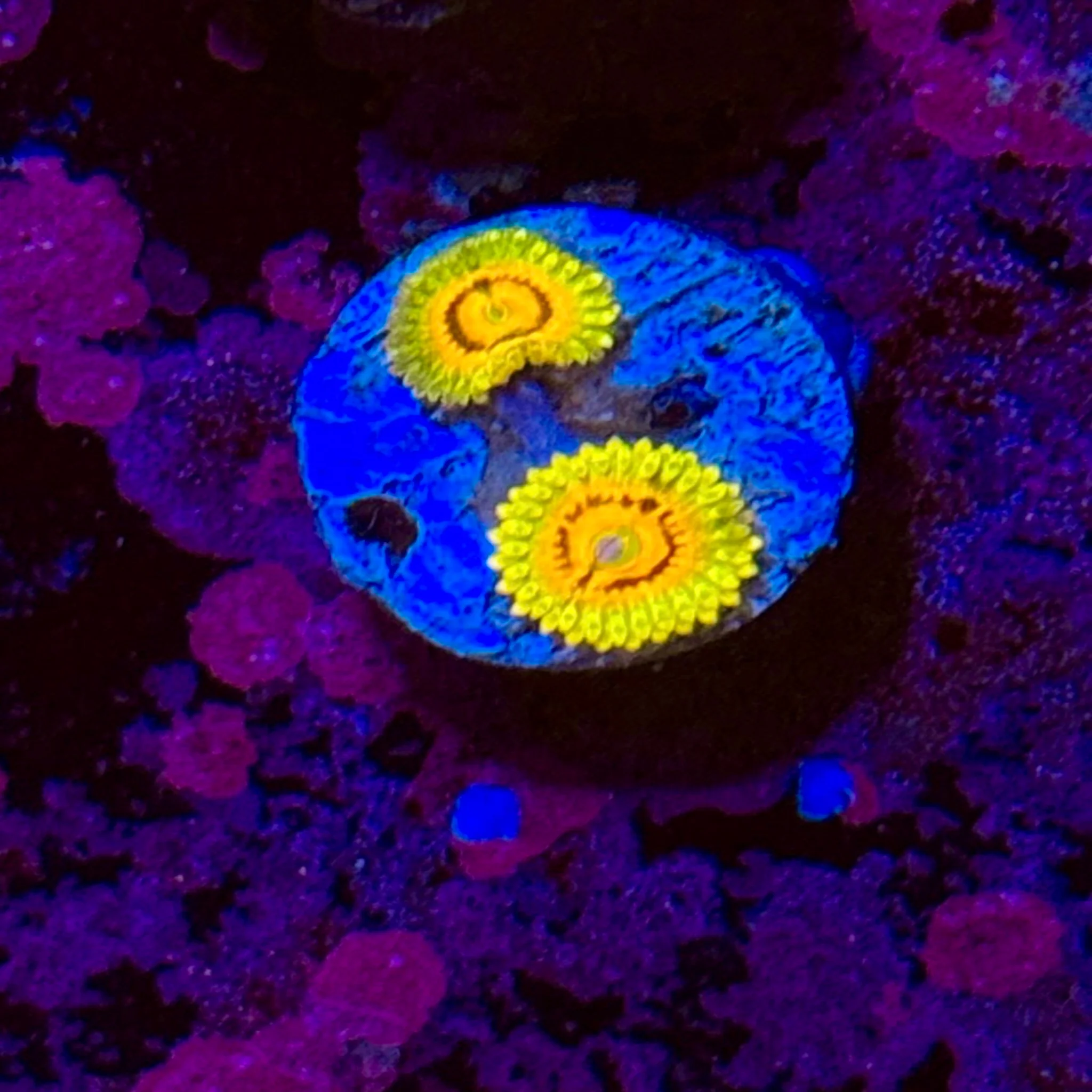
Rainbow Incinerator Zoas
To care for zoanthids, maintain stable water parameters (temperature: 75–80°F or 24–27°C; salinity: 1.023–1.025; pH: 8.1–8.4) and provide moderate lighting and flow.
Always wear protective gloves and eye protection when handling them, as they can release a dangerous toxin called palytoxin.
Nutrients:
Aim for a slight nutrient level (Nitrate: \(2-15\) ppm, Phosphate: \(0.03-0.1\) ppm) for growth, but avoid ultra-low levels. Lighting and flow Lighting: Moderate to high intensity with a spectrum leaning towards blues is often ideal for fluorescence. Acclimate them slowly to new lighting conditions to prevent bleaching.
Flow:
Provide moderate, indirect flow that causes gentle swaying without flattening the polyps. Aim for a \(10-20x\) tank turnover per hour, distributed across multiple sources. Placement and handling.
Placement:
Place them in the middle of the aquarium where they will receive adequate light and flow.
Handling:
This is the most critical safety step. Wear gloves and safety glasses or a face mask when handling zoanthids, as they can release a potent toxin (palytoxin) that can be hazardous if inhaled or absorbed through the skin. Never scrub or boil rocks with zoanthids on them. Feeding.
Feeding:
Zoanthids are photosynthetic, but you can boost their growth by occasionally feeding them small-particle foods, such as Vitalis Soft Coral food or Oyster-Feast.
Aggression:
Zoanthids are not very aggressive, but some species can spread quickly and dominate other corals. Place them on a rock by themselves to allow for easy management.
Original: $46.49
-70%$46.49
$13.95Rainbow Incinerator Zoas
To care for zoanthids, maintain stable water parameters (temperature: 75–80°F or 24–27°C; salinity: 1.023–1.025; pH: 8.1–8.4) and provide moderate lighting and flow.
Always wear protective gloves and eye protection when handling them, as they can release a dangerous toxin called palytoxin.
Nutrients:
Aim for a slight nutrient level (Nitrate: \(2-15\) ppm, Phosphate: \(0.03-0.1\) ppm) for growth, but avoid ultra-low levels. Lighting and flow Lighting: Moderate to high intensity with a spectrum leaning towards blues is often ideal for fluorescence. Acclimate them slowly to new lighting conditions to prevent bleaching.
Flow:
Provide moderate, indirect flow that causes gentle swaying without flattening the polyps. Aim for a \(10-20x\) tank turnover per hour, distributed across multiple sources. Placement and handling.
Placement:
Place them in the middle of the aquarium where they will receive adequate light and flow.
Handling:
This is the most critical safety step. Wear gloves and safety glasses or a face mask when handling zoanthids, as they can release a potent toxin (palytoxin) that can be hazardous if inhaled or absorbed through the skin. Never scrub or boil rocks with zoanthids on them. Feeding.
Feeding:
Zoanthids are photosynthetic, but you can boost their growth by occasionally feeding them small-particle foods, such as Vitalis Soft Coral food or Oyster-Feast.
Aggression:
Zoanthids are not very aggressive, but some species can spread quickly and dominate other corals. Place them on a rock by themselves to allow for easy management.
Product Information
Product Information
Shipping & Returns
Shipping & Returns
Description
To care for zoanthids, maintain stable water parameters (temperature: 75–80°F or 24–27°C; salinity: 1.023–1.025; pH: 8.1–8.4) and provide moderate lighting and flow.
Always wear protective gloves and eye protection when handling them, as they can release a dangerous toxin called palytoxin.
Nutrients:
Aim for a slight nutrient level (Nitrate: \(2-15\) ppm, Phosphate: \(0.03-0.1\) ppm) for growth, but avoid ultra-low levels. Lighting and flow Lighting: Moderate to high intensity with a spectrum leaning towards blues is often ideal for fluorescence. Acclimate them slowly to new lighting conditions to prevent bleaching.
Flow:
Provide moderate, indirect flow that causes gentle swaying without flattening the polyps. Aim for a \(10-20x\) tank turnover per hour, distributed across multiple sources. Placement and handling.
Placement:
Place them in the middle of the aquarium where they will receive adequate light and flow.
Handling:
This is the most critical safety step. Wear gloves and safety glasses or a face mask when handling zoanthids, as they can release a potent toxin (palytoxin) that can be hazardous if inhaled or absorbed through the skin. Never scrub or boil rocks with zoanthids on them. Feeding.
Feeding:
Zoanthids are photosynthetic, but you can boost their growth by occasionally feeding them small-particle foods, such as Vitalis Soft Coral food or Oyster-Feast.
Aggression:
Zoanthids are not very aggressive, but some species can spread quickly and dominate other corals. Place them on a rock by themselves to allow for easy management.